announcement Transform
One year of Applied Comms With AI: what we learned, what changed, where we are now
The Applied Comms With AI newsletter set out to experiment in public and report back. Here's the year 1 stocktake, and where AI in comms stands.


A little over a year ago, I began the Applied Comms With AI newsletter with a simple promise: to experiment, fail, learn, and share everything along the way.
Twelve months, two dozen-plus experiments, tool tests and practitioner interviews later – as well as a couple of recent awards wins – it feels like a perfect moment to pause, breathe, and take stock.
My headline would be this: yes, the progress has been real – at times dizzying – and it is larger than the sceptics admit. However, what now holds most communications teams back is everything around the models.
When Applied Comms With AI launched in June 2025 (then as ‘Applied Comms AI’ before a subtle rebrand), the question in most comms rooms was still “can the tools actually do this?” A year on, for a large share of everyday comms work, that question has quietly been settled. The more useful question now is harder, and it has very little to do with AI: can your organisation absorb what the tools can already do – and is it able to do this at the required pace to avoid falling behind your peers?
The progress is real, and bigger than the sceptics admit
Looking back, the record of the year is striking.
The work moved from single prompts to whole workflows. Building a voice-enabled strategy architect that turns a spoken brief into a campaign dashboard would have been an expansive and all-consuming research project not long before. A complete new-business pitch suite in under an hour, built with Claude Skills and Projects, used to be several days (or weeks?) of work. Claude Cowork shifted the job from content creator to system builder, and the Comms With AI resource itself was built with Claude Code by someone who is not, by trade, a developer (at least the last time I updated my CV…).
All of it is work that shipped, and you can click through above and use it. The capability arrived, and the centre of gravity moved from AI as a writing assistant to AI as a workflow engine, which is the whole premise of the AI Agent Series we have been publishing this spring. If looking carefully, you can also see a shift from my natural cynicism to becoming more of an advocate for AI’s capabilities – while still wanting to draw attention to the challenges, shortcomings, and ethical issues.
So if the tools are this capable, why does so much AI in communications still feel stuck?
The bottleneck moved
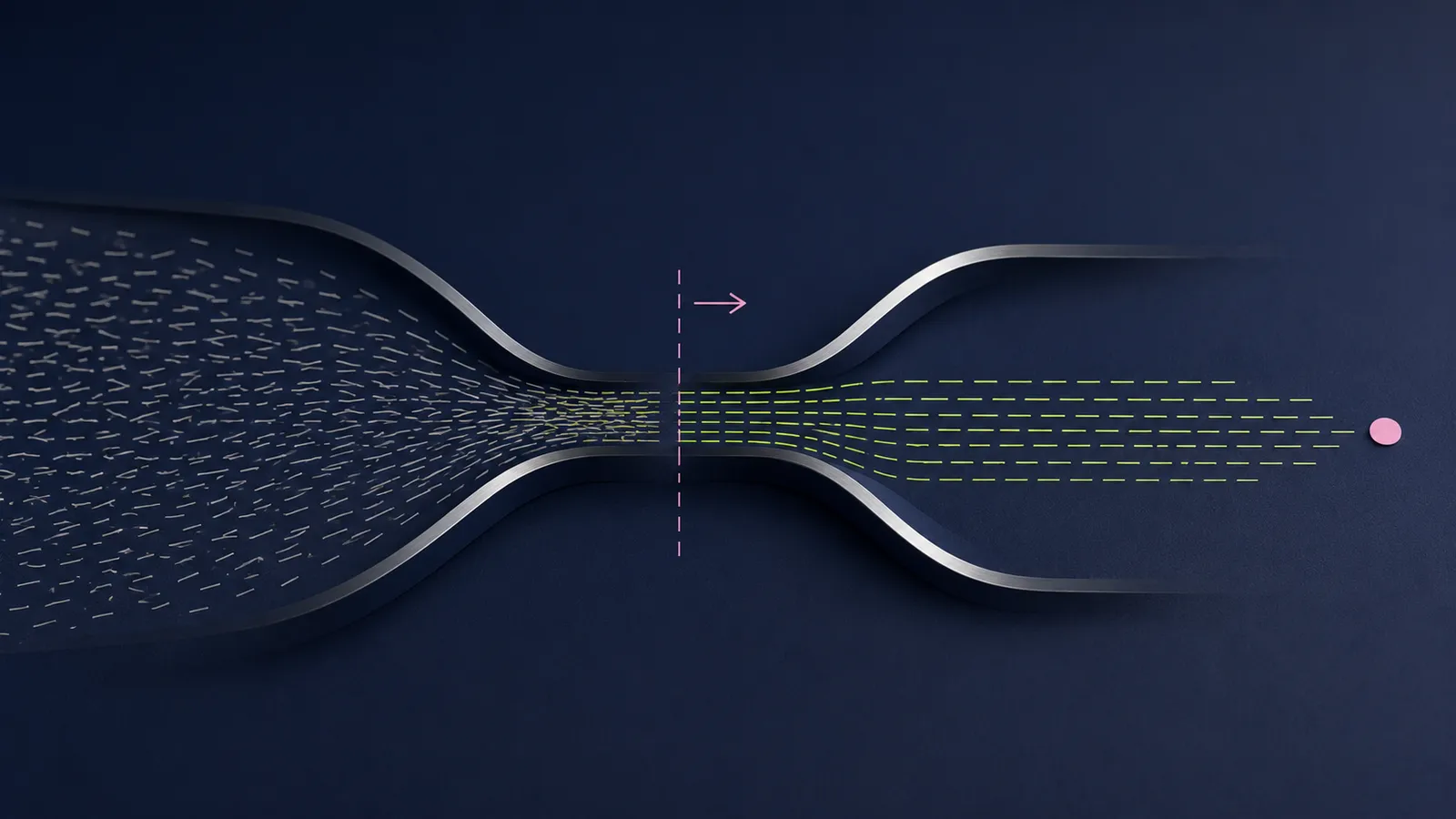
Here is the year’s most important lesson, and it runs through almost every interview in the series. With models at the frontier, the limiting factor is now the conditions around them: the state of an organisation’s knowledge, its honesty, and its willingness to change how it works.
Neal Mann, the NOAN founder, put the knowledge problem most bluntly. “You cannot put AI on top of a mess of business knowledge and expect accurate results,” he told us. In his analysis, hallucinations are not a bug to be patched but a structural feature of any system asked to reason over contradictory inputs: 25 versions of the brand positioning, pricing that disagrees with itself, strategy buried in a deck nobody can find. The problem sits in the inputs, and that makes it an organisational one.
Ben Verinder, eight years into researching AI in PR, found a second wall, and it is about trust. His data suggests around half of in-house teams are not asking their agencies anything about AI use at all, and agencies report the mirror image. He points to research showing a measurable trust penalty when stakeholders discover AI has been used in ways they would not have sanctioned. Disclosure on its own does not fix that; the use has to be socialised. His sharpest line is the one comms leaders most need to hear: “This is a change programme, not an IT programme.”
Then there is the failure mode with nothing to do with capability at all. Almost every team that has tried AI has a pilot that worked: an agent that drafts the newsletter, a workflow that turns a report into a week of content in an afternoon. Six months later the pilot is still a pilot, or it has quietly stopped, because the one capable person who built it got busy or moved on. The hard part is building an organisation that can hold the new way of working after the novelty fades, and it is the argument the AI Agent Series builds toward in its closing phase.
Put those three together and you have a real state of the nation. The tools can do the work in a demo; deployment is where almost all the difficulty now lives, and it comes down to trust, knowledge and organisational design.
What this means if you lead a comms team
The temptation, reading the capability story, is to accelerate: do the same things, faster. The year’s evidence says that is the trap. The teams getting value are the ones treating this as a redesign of how the work is done.
Four things follow, and none of them are about choosing a tool.
- Start from problems, not products. The teams Ben sees getting it right do not ask “what can we use AI for?” They ask “what problems do we have that AI could help with?”
- Fix the knowledge layer before you scale AI on top of it, or you automate the mess faster.
- Name ownership and a shared standard for what good AI-assisted work looks like, so a useful pilot becomes a capability rather than a story the team tells about the time it tried AI.
- And invest in judgement over prompt-craft: the scarce skill is knowing when to trust an output and when to distrust it, which is the briefing discipline most communicators already have.
This is also, candidly (and with admitted self-interest), where the two halves of our own ecosystem earn their keep. The Comms With AI templates exist to make the repeatable parts repeatable. The harder, organisation-specific work, the readiness, the redesign, the change leadership, is what my digital comms consultancy Faur does hands-on. Both are ways of doing the work the deployment gap demands.
The year in one place
If you have joined recently, much of what is above was published before you arrived. So here is the back catalogue in one place, the evidence this scorecard is built on, grouped by the kind of read each one is. It starts where the publication did, with why Applied exists and what to expect.
The AI Agent Series. The five-phase framework for comms with AI, in six pieces (series tag):
- The framework
- Strategise: the work before the work
- Create: the volume problem
- Govern: the cost of a miss
- Monitor: the lag problem
- Transform: the pilot trap
Interviews. Practitioners on what AI is really doing to the work (many thanks again to all those who I spoke to!):
- Barney Evison of Flipside, from Watson to Lovable
- Joyce Higgins of FleishmanHillard, the AI architect
- Neal Mann of NOAN, the living fact layer and the death of the PDF
- Rik Turner, the SEO-PR strategist who saw AI search coming
- Ben Verinder, the honesty gap
Builds and experiments. Things I made, including what broke:
- How we build: app development ground rules
- A LinkedIn content creator, built with Claude
- The perfect AI prompt for media pitch subject lines
- A ‘will my boss hate this?’ detector, built with Lovable
- A voice-enabled AI strategy architect
- Claude Cowork, from content creator to system builder
- Building a live AI webinar with the workflow I was teaching
- An ICP agent to build an AI target reader
- Building Comms With AI with Claude Code
Deep dives and trends. The thinking underneath the builds:
- Prompt engineering: our production standards
- How to set up project folders in ChatGPT and Claude for comms work
- AI in crisis comms: help or hindrance?
- 2026 communications trends
Tool reviews. Tested properly, not just tried:
- Our tool-testing methodology
- Testing ChatGPT’s Deep Research
- Grammarly: your everywhere comms subeditor
- A complete pitch suite in under an hour, with Claude Skills and Projects
Year two
Earlier this month, at the inaugural AI Comms Awards run by Communicate Magazine, Comms With AI, the free resource that grew out of this publication, won Gold for Best Innovation in AI Tools for Communications, and I was named AI Communications Leader of the Year. It was a hell of a way to bring in year two. So what now, you may ask?
Well, a note of caution to close, borrowed from Ben: anyone forecasting AI’s path with certainty is “either overconfident or telling fibs, or both.” So no predictions here.
What is safe to say is that the frontier for exploration has moved markedly. For the year ahead, the experiments worth running, and documenting, are about whether real teams, with real politics and real legacy processes, can put each new model to work without losing the judgement that made them good in the first place.
That was the promise a year ago: experiment, fail, learn, share. The experiments have only got more interesting. See you for year two.
Coming up
Update, October 2026: the Leader Interview with Elif Güvençer took place on 1 July. Read the write-up. The July training sessions with Big Fish Training have run too; Training has what is on now.
Applied Comms With AI documents what actually works in AI for communicators, and what does not. Explore the free resource at Comms With AI, and subscribe.
More like this
announcementTransform
Applied has moved to Comms With AI: shorter, dated, and tied to the workApplied now lives on Comms With AI. Every piece moved with its date, every old address leads to the same piece, and from today every piece names the template, tool or phase it puts to work.
experimentGovern
No, Claude Fable 5.2 isn't AGI: five things it built for comms work, and the 15 errors it found in oursThe morning after Anthropic released Claude Fable 5.2, Michael asked it for its five most impressive pieces of comms work. It built a crisis simulation you can play and a 3D film made in Blender from code alone, then flagged 15 errors in our own archive.
articleTransform
Leaving Substack or Ghost without losing a reader: an AI-assisted migration checklistMoving a website off a platform like Substack or Ghost used to be real digital comms gruntwork. In our case, moving a publication with dozens of pages onto a new site took a few days rather than weeks – with Claude doing most of the building and me being the decision-maker for every switch. Here's what worked, what went wrong, and what you can put into practice today.